Transforming Rajasthan’s arid realms: Empowering women through water conservation
Barmer and Jaisalmer, known for their arid landscapes and tales of hardship, once witnessed women enduring gruelling journeys of 4 to 5 kilometers under the relentless Sun just to procure drinking water.
Abhijit Deb | Barmer | January 4, 2024 1:19 pm
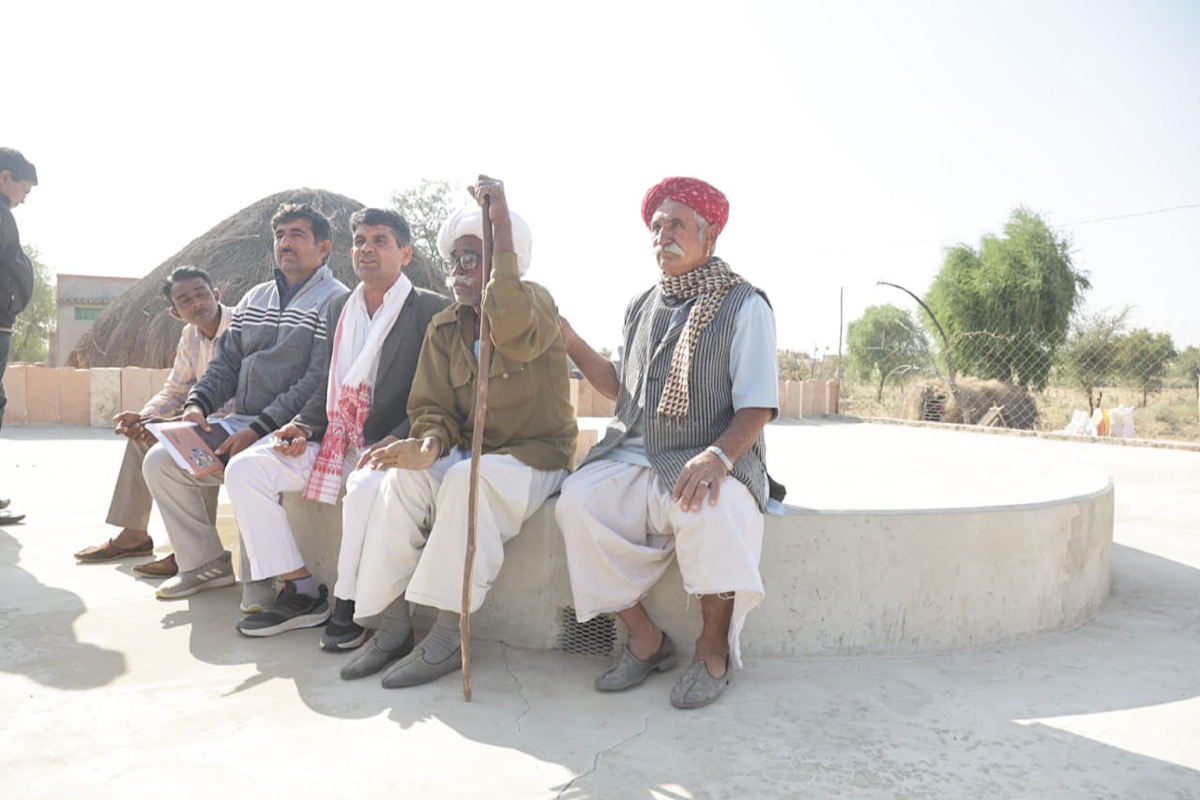
Villagers in Rajasthan sit on a 'taka' constructed to conserve water (Photo:SNS)
In the heart of Rajasthan’s unforgiving desert, where the scorching sun and parched lands were once the norm, a transformational tide has swept through the lives of its inhabitants, especially its resilient women.
Barmer and Jaisalmer, known for their arid landscapes and tales of hardship, once witnessed women enduring gruelling journeys of 4 to 5 kilometers under the relentless Sun just to procure drinking water. It was a daily saga of resilience and struggle etched into the folklore of these lands, where women balanced ‘matkas’ (water pots) on their heads, weaving their way through oppressive heat during summer days.
Advertisement
Amidst this adversity, a beacon of change emerged with the inception of a water conservation initiative under the various programmes like Mahatma Gandhi National Rural Employment Guarantee Act (MGNREGA) and Prime Minister Awas Yojana.
Advertisement
This initiative somewhat alleviated the water crisis haunting these districts. The traditional ‘takas’ or tanks, with a capacity of 30,000 litres each, were constructed across villages, heralding hope in these parched lands.
Barmer district Collector Arun Purohit reflected on the severity of the crisis, stating, “Villagers used to handle milk and ghee generously but were miserly with water due to its scarcity in the desert areas.”
The Indira Gandhi Nahar Project and Narmada project were also being implemented, spanning the desert expanse, covering over 2,765 villages. These endeavors were lifelines, providing a sustained flow of water where it was once a rarity.
The impact of these `takas’ among the villages, especially for the women who bore the brunt of the water crisis most, is giving them some relief.
Dami Devi from Kurla village in Barmer expressed her relief, “These ‘takas’ have become saviours for women in the villages. We no longer endure exhausting treks for water in the scorching heat. With stored water available at any time, our lives have transformed somewhat.”
The narrative has shifted from tales of struggle to one of empowerment and relief, though there are miles to go to quench the thirst for development .
But a beginning has been made and these initiatives not only quenched the thirst of the land but at least liberated women from the shackles of endless water journeys, empowering them to engage in more productive endeavors and fostering a newfound sense of community resilience.
As the Sun sets over Rajasthan’s desert, the glisten of water in these ‘takas’ symbolises more than just sustenance—it represents a narrative of empowerment, resilience, and the triumph of collective efforts in turning a barren landscape into an oasis of hope and change.
Rajasthan Chief Minister Bhajan Lal Sharma has directed officials to step up alertness and surveillance in districts along the Indo-Pak international border to curb cross-border crimes.
Rajasthan has moved one step forward in its effort to emerge as logistics hub of North India with Hasti Petrochemical & Shipping Ltd (HPCSL) inaugurating its new venture "The Thar Dry Port ICD at Hirnoda near here.
At least three pilgrims were killed and 13 others injured when a tempo traveller collided head-on with a truck in the Nokha region of Rajasthan’s Bikaner district early Thursday morning.